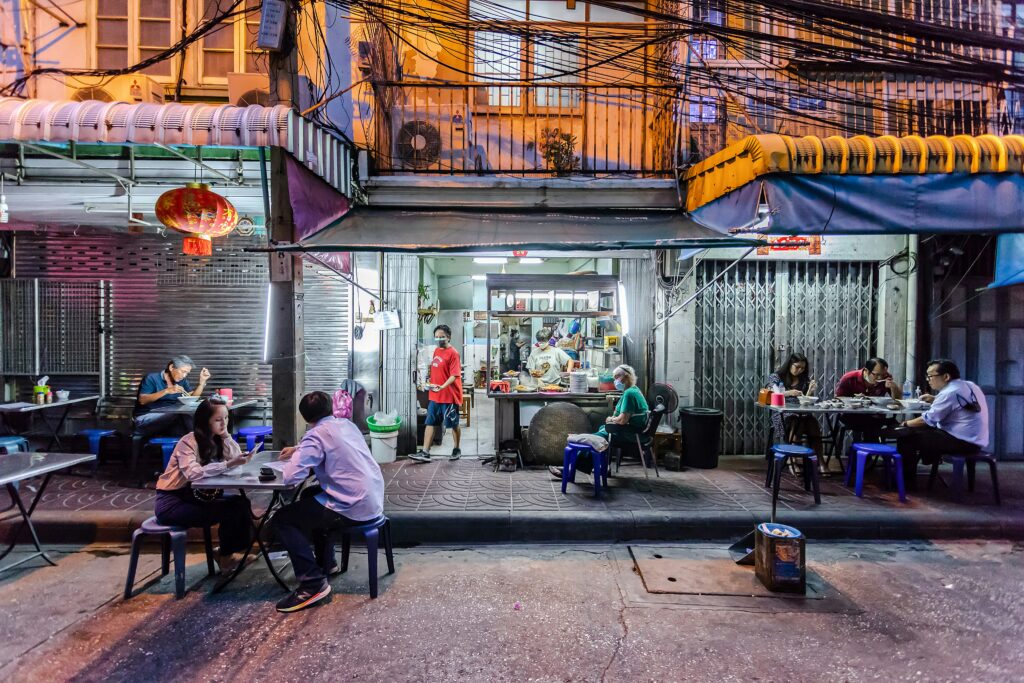
Most Australians know Thailand is more affordable than home. What’s less clear is what that actually means once you’re on the ground — paying for meals, transport, and everyday expenses in places like Bangkok or Chiang Mai. This isn’t about exchange rate maths. It’s about understanding what your daily spending realistically buys you, and how that compares to what the same $50 gets you in Sydney or Melbourne.
This comparison focuses on short-term travel spending: food, transport, and small daily purchases that shape how a trip feels. It’s not a budget travel guide. It’s a practical comparison for Australians used to Australian prices.
It’s also worth noting that Thailand is not the ultra-cheap destination it once was. Like many countries, everyday costs have risen noticeably since COVID — particularly in major cities and popular tourist areas. Food, transport, and accommodation are still affordable by Australian standards, but prices today are meaningfully higher than they were five or ten years ago. This comparison reflects current, post-COVID pricing, not outdated expectations based on pre-2020 travel.
Why Exchange Rates Don’t Tell the Full Story
Converting Australian dollars to Thai baht gives you a headline number, but it doesn’t explain purchasing power. At the time of writing, $50 AUD converts to roughly 1,150–1,200 THB. On its own, that figure doesn’t tell you how easily you can move around, eat out, or make spontaneous decisions during the day.
The difference between Australian and Thai prices isn’t just currency-driven. It reflects different wage levels, operating costs, and service models. In Australia, hospitality and transport prices absorb high wages, rent, insurance, and compliance costs. In Thailand, labour costs are lower and many everyday services are structured to be affordable for frequent local use.
As a result, $50 AUD doesn’t just go further in Thailand — it changes how much friction there is in everyday spending.
Real-World Daily Cost Comparison
The table below shows typical prices an Australian visitor would encounter when using mainstream options in major Thai cities, compared with equivalent spending in Sydney or Melbourne.
| Expense | Thailand (Bangkok / Chiang Mai) | Australia (Sydney / Melbourne) |
| Local beer at a casual venue | $3–$5 AUD | $8–$12 AUD |
| Casual sit-down meal | $6–$12 AUD | $20–$30 AUD |
| Coffee | $3–$5 AUD | $4.50–$6 AUD |
| Grab / rideshare (approx. 5 km) | $3–$6 AUD | $14–$22 AUD |
| Mobile data (daily average) | $1.50–$3 AUD | $2–$4 AUD |
These ranges reflect how most travellers actually spend money — eating at casual restaurants, using rideshare when convenient, and not actively searching for the cheapest possible option.
If you’re budgeting for a trip, you may also want to read:
• ATM Fees in Thailand: Why Australians Pay 220 THB Per Withdrawal
• Best SIM Card for Thailand (2026 Comparison): What Australians Should Use
• Bangkok Airport to City: BTS, Taxi, Grab or Airport Rail?
What $50 AUD Covers in a Typical Day in Thailand
With $50 AUD in Thailand, an Australian traveller can generally enjoy a full, comfortable day without closely monitoring prices:
- Breakfast and coffee at a café or local eatery
- A casual sit-down lunch with a drink
- Several Grab rides or local transport trips
- An afternoon coffee, juice, or snack
- Dinner at a popular local restaurant with one or two beers
- Small incidental costs like bottled water or convenience store items
You’re not constantly weighing up costs. Transport is easy to use, eating out is routine rather than occasional, and there’s room to make unplanned choices without exceeding your daily spend.
This assumes accommodation is paid separately and focuses purely on daily, on-the-ground expenses.
What $50 AUD Covers in a Typical Day in Australia
In Sydney or Melbourne, $50 AUD covers essential daily spending, but with far less flexibility:
- A morning coffee and possibly a pastry
- A casual lunch from a bakery, food court, or budget café
- One or two public transport trips, or a single short rideshare
- A takeaway dinner, or a pub meal if you skip lunch
- Very limited room for discretionary spending
Spontaneous decisions carry a cost. A single Uber ride or sit-down dinner quickly absorbs a large share of the budget. Most Australians are accustomed to this and plan accordingly, but it highlights how tightly $50 is allocated at home.
At home, $50 tends to cover necessity. In Thailand, it allows for choice.
Why the Difference Feels Bigger Than the Numbers
The contrast isn’t just about headline prices. It’s shaped by how services are delivered.
In Thailand, lower labour costs allow restaurants, cafés, and transport services to operate with more staff and longer hours at lower prices. Table service is common even at inexpensive venues, and convenience is often built into the base price.
In Australia, high wages and operating costs mean service is streamlined to control prices — counter ordering, QR menus, and shorter service windows are common. You’re paying more, but often receiving a more limited level of service interaction.
Tipping is also less embedded in Thailand. While appreciated in some settings, it isn’t expected in everyday dining. In Australia, service charges, card surcharges, and weekend pricing increasingly add to the final bill.
Higher commercial rents and overheads in Australian cities further widen the gap.
What This Means for Australian Travellers
This comparison isn’t about deciding where your money goes “furthest” in abstract terms. It’s about understanding how your spending habits translate in a different system.
For Australians used to budgeting carefully at home, Thailand often feels easier day to day. Eating out is routine rather than occasional, transport decisions are less stressful, and small indulgences don’t require trade-offs elsewhere.
It also helps reset expectations. A $10 meal in Thailand isn’t cheap because it’s inferior — it’s priced within a different economic structure. Understanding that allows you to spend confidently, avoid overpaying, and plan your daily budget with less friction.
Knowing what $50 AUD realistically buys makes travel smoother and reduces mental load throughout the trip.
Costs and comparisons last checked: February 2026