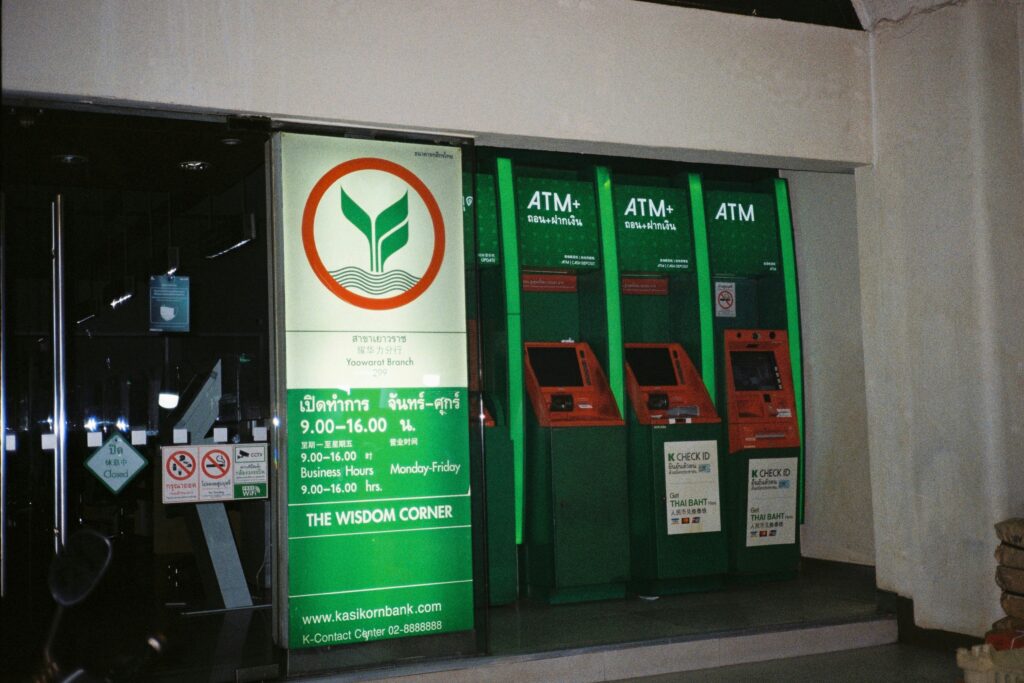
Money & ATMs in Thailand for Australians
Managing money in Thailand is straightforward once Australians understand how cash, cards, and ATMs are actually used on the ground. Thailand has a modern banking system and widespread ATM access, but it remains more cash-based than Australia, particularly outside large shopping centres and hotels.
This guide explains how payments work in Thailand, how Australians should use ATMs and cards, and how to avoid unnecessary fees or confusion during their trip.
Overview: How payments work in Thailand
Thailand operates on a mixed cash-and-card system. Cards are widely accepted in some settings, but cash is still essential for many everyday transactions.
Australians should expect to:
- Use cash frequently for transport, markets, and small purchases
- Use cards comfortably in hotels, shopping centres, and larger restaurants
- Rely on ATMs as the main way to access Thai baht
Understanding this balance makes day-to-day spending much easier.
Cash vs card reality
Where cards work well
Cards are commonly accepted at:
- Hotels and resorts
- Larger restaurants and cafés
- Shopping centres and supermarkets
- Tour offices and established businesses
Visa and Mastercard are the most widely accepted.
Where cash is essential
Cash is still required for:
- Street food and local restaurants
- Markets and small shops
- Taxis and motorcycle taxis
- Tips, small services, and incidental expenses
- Many businesses outside major tourist areas
Australians who rely entirely on cards often find this inconvenient.
Using ATMs in Thailand
Availability
ATMs are widely available across Thailand, including:
- Major cities
- Tourist areas
- Shopping centres
- Convenience stores
Finding an ATM is rarely a problem in populated areas.
Withdrawal limits
Thai ATMs typically limit withdrawals to a fixed amount per transaction. This means Australians may need multiple withdrawals to access larger sums.
Local ATM fees
Most Thai ATMs charge a local withdrawal fee for foreign cards. This fee is applied per transaction, regardless of the amount withdrawn.
Australian bank fees
In addition to local ATM fees, Australian banks may charge:
- An international transaction fee
- An international ATM withdrawal fee
These fees vary by bank and account type.
Why fewer, larger withdrawals are better
Because ATM fees apply per transaction, making fewer, larger withdrawals usually reduces total fees compared to withdrawing small amounts frequently.
Dynamic Currency Conversion (DCC)
Dynamic Currency Conversion occurs when an ATM or payment terminal offers to convert a charge into Australian dollars instead of Thai baht.
Australians should:
- Always decline AUD conversion
- Always choose Thai baht (THB)
DCC exchange rates are usually poor and result in higher costs than allowing your bank to handle the conversion.
Using Wise and other multi-currency cards in Thailand
What Wise is
Wise is a multi-currency account that allows Australians to hold and spend foreign currencies, including Thai baht, using a debit card.
Why Australians use Wise in Thailand
Australians often use Wise because it:
- Uses transparent exchange rates
- Works well with Thai ATMs
- Can reduce currency conversion costs
Where Wise cards work
Wise cards function like standard Visa or Mastercard debit cards and are accepted wherever those networks are supported.
ATM compatibility
Wise cards work at most Thai ATMs. Local ATM fees still apply, as these are set by the ATM operator, not Wise.
Limitations
Wise is a useful tool, but:
- Cash is still required for many purchases
- ATM fees still apply
- A backup card is recommended in case of issues
It should be treated as one option, not a single solution.
Australian debit and credit cards
Australian-issued debit and credit cards generally work well in Thailand.
Australians should:
- Carry at least two cards from different accounts if possible
- Be aware of daily withdrawal limits
- Ensure cards are enabled for international use
Notifying your bank before travel can help prevent unexpected blocks, particularly for first-time overseas use.
Money exchange and currency tips
ATMs vs exchange counters
ATMs are usually the simplest way for Australians to access Thai baht. Exchange counters can be useful but rates vary widely.
Airport exchanges
Currency exchange at airports is convenient but typically offers poorer rates than ATMs or city-based exchange counters.
Damaged notes
Some businesses may refuse torn or heavily damaged banknotes. Keep notes in good condition where possible.
Tipping in Thailand (Australian expectations)
Tipping is not expected in Thailand and is not part of everyday culture.
That said:
- Small tips may be appreciated in some service settings
- Rounding up a bill or leaving small change is common
- Tipping is optional, not required
Australians should not feel pressured to tip.
Common money mistakes Australians make
- Carrying no cash at all
- Relying on a single card
- Accepting Dynamic Currency Conversion
- Making many small ATM withdrawals
- Underestimating how often cash is needed
These are easily avoided with basic planning.
Final summary
For Australians, managing money in Thailand is simple once expectations are set correctly. Cash remains essential for everyday spending, ATMs are widely available, and cards work well in larger businesses.
By understanding ATM fees, declining AUD conversion, carrying backup cards, and withdrawing cash sensibly, Australians can avoid unnecessary costs and focus on enjoying their trip.
For broader preparation, refer to the pre-departure checklist before you fly.
Last reviewed: Feb 2026
Content on this page is reviewed regularly (approximately every 3 weeks) to reflect changes to entry requirements, visa rules, and common issues affecting Australian travellers. Where requirements are critical, official government sources are referenced.