Here is the clean final version with the recommended changes applied:
- removed the
---separators - added a clear real-world example after the comparison table
- tightened a few sentences slightly for readability
- kept the tone consistent with your AU Travel Foundations ethos
Dynamic Currency Conversion in Thailand: Why Australians Should Always Choose THB
Introduction
If you’ve used a bank card in Thailand and been asked whether you’d like to pay in Australian dollars or Thai baht, you’re in exactly the right place.
This guide explains what that question means, why it appears so often, and what you should do every time it comes up — whether at an ATM, a hotel, a shop, or a restaurant payment terminal.
The short answer is simple: always choose Thai baht (THB).
The explanation below will show you why, and help you recognise the prompt so you can confidently make the right choice every time.
What Dynamic Currency Conversion (DCC) Actually Is
Dynamic Currency Conversion, or DCC, is a service offered by many overseas ATMs, hotels, and card payment terminals. It allows you to pay in your home currency — in this case, Australian dollars — instead of the local currency of the country you’re visiting.
On the surface, this sounds convenient. Seeing a price in AUD may feel familiar and reassuring. However, this convenience almost always comes at a cost.
When DCC Appears
DCC can appear at several points during a trip to Thailand:
- At ATMs when you withdraw cash
- At hotel front desks when settling your bill
- At retail shops, restaurants, or tour operators when paying by card
- At portable card terminals used by taxis or tour guides
Why the Screen Is Asking You This Question
When a Thai ATM or payment terminal detects that your card is issued by an overseas bank, it offers to convert the amount into your home currency on the spot. That is DCC in action.
The terminal is essentially saying:
“We can convert this transaction into AUD right now and show you exactly what you’ll pay.”
What it does not highlight is that the exchange rate used for that conversion is set by the merchant or ATM operator — not by Visa or Mastercard — and it usually includes a markup.
Why Paying in AUD Usually Costs More
When you choose to pay in AUD at a Thai ATM or terminal, the conversion from Thai baht to Australian dollars is handled by the local operator rather than your Australian bank.
That operator applies their own exchange rate, which typically includes a margin above the standard interbank rate — often somewhere between 3% and 8%.
If you instead choose THB, your Australian bank receives the transaction in Thai baht and converts it using the standard Visa or Mastercard wholesale exchange rate, plus any fee your own bank charges.
In most cases, this produces a more favourable result.
A Simple Comparison
| Option | What Happens |
|---|---|
| Choose THB | Your bank converts the amount using the standard Visa or Mastercard exchange rate |
| Choose AUD | The ATM operator converts the transaction first and adds their own markup before charging your card |
For example, a 10,000 THB ATM withdrawal might convert to roughly $430 AUD using the standard Visa or Mastercard rate. If Dynamic Currency Conversion is applied, the same withdrawal could cost $450–$460 AUD depending on the markup used by the operator.
Your Australian bank may still charge an international transaction or conversion fee, but those fees are separate from DCC and apply regardless of which currency you choose.
When Australians See DCC in Thailand
Dynamic Currency Conversion appears frequently throughout Thailand, particularly in tourist areas. These are the most common situations.
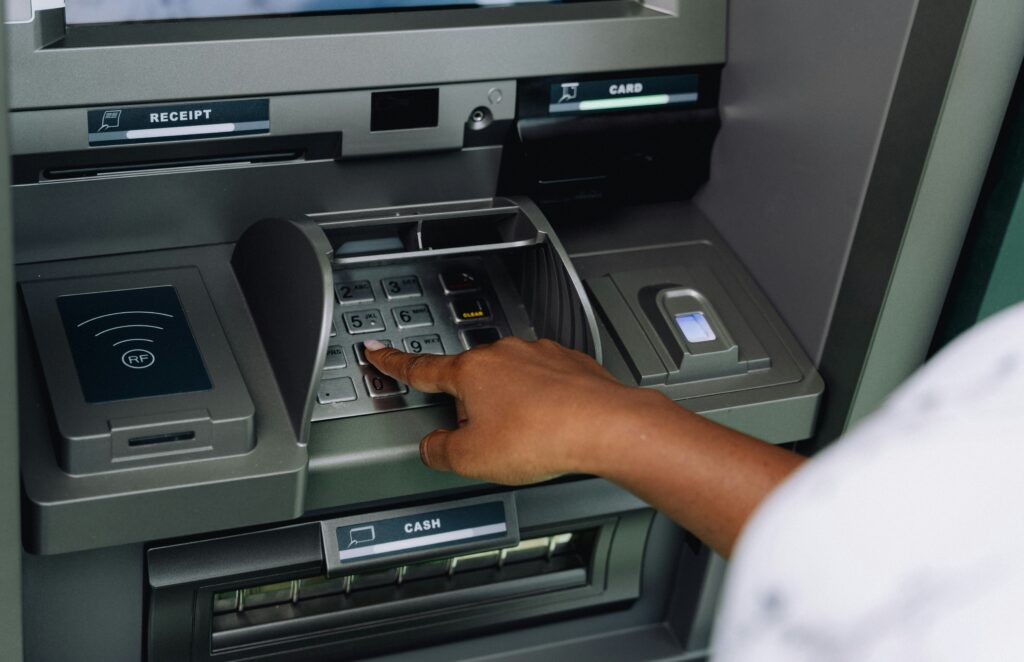
ATMs are where Australians encounter DCC most often. After entering your PIN and selecting a withdrawal amount, the ATM will typically ask whether you want to proceed in AUD or THB.
Hotel payments are another common trigger. When settling a bill at a hotel front desk, the payment terminal may offer to process the transaction in AUD.
Retail card terminals in shops, restaurants, and convenience stores sometimes present the same option.
Tour operators or taxi drivers using portable card readers may also offer or default to DCC.
How the Options Are Worded
The DCC offer does not always appear as a simple choice between AUD and THB. You may see prompts such as:
- “Charge in AUD”
- “Pay in Australian dollars”
- “Guaranteed exchange rate”
- “Fixed rate transaction”
The phrase “guaranteed exchange rate” can be particularly misleading. It simply means the operator is locking in their own exchange rate — including their markup.
The Simple Rule Australians Should Follow
Always choose THB when paying or withdrawing money in Thailand.
This applies whether you are at an ATM, hotel, shop, or restaurant terminal.
Choosing the local currency means:
- The conversion is handled by your Australian bank or card network
- You avoid the markup added by the merchant or ATM operator
- You benefit from the standard Visa or Mastercard exchange rate
- Your bank statement will show the THB amount converted at the prevailing rate
The only party that benefits when you choose AUD is the operator offering the conversion.
Situations Where Travellers Get Confused
Several common situations lead Australians to accidentally select AUD.
Thinking AUD feels safer.
Seeing a familiar dollar amount can feel reassuring, especially if you’re not used to Thai baht. However, the AUD amount shown already includes the operator’s markup.
Trusting the “guaranteed rate.”
This wording emphasises certainty, but certainty does not mean a competitive exchange rate.
Pressing the wrong option.
DCC prompts are sometimes designed so that the AUD option appears larger or more prominent.
Staff selecting the currency.
In some hotels or shops, staff may process the payment before you notice the currency choice. It is reasonable to ask for the transaction to be run again in THB.
Assuming it doesn’t matter for small purchases.
The markup applies to every DCC transaction, regardless of the amount.
How This Fits With Thailand ATM Fees
Choosing THB does not eliminate ATM withdrawal fees. These are separate charges.
Most Thai ATMs apply a flat fee for international withdrawals (typically around 220 THB). Your Australian bank may also charge a separate overseas withdrawal fee.
This means:
- Choosing THB avoids the DCC markup
- But the ATM withdrawal fee still applies
Both systems operate independently.
Quick Decision Guide for Australians
When a currency choice appears, follow this rule:
- ATM asks AUD or THB? → Choose THB
- Shop or restaurant terminal asks currency? → Choose local currency (THB)
- Hotel terminal offers to charge in AUD? → Ask for THB
- Screen shows “guaranteed exchange rate”? → Decline and choose THB
- Unsure what the screen means? → Select the option that shows THB or “local currency”
The consistent principle: let your Australian bank handle the conversion.
FAQs
What does “pay in AUD or THB” mean?
It means the payment terminal is offering to convert the price into Australian dollars on the spot instead of sending the transaction to your bank in Thai baht. This is Dynamic Currency Conversion.
Is choosing AUD ever better?
For Australian travellers, almost never. The exchange rate applied when choosing AUD usually includes a markup.
Does DCC happen at Thai ATMs?
Yes. Thai ATMs commonly display a currency choice after you select the withdrawal amount.
Does my Australian bank charge overseas fees?
Most Australian banks charge international transaction or currency conversion fees. These are separate from DCC.
What happens if I accidentally choose AUD?
The transaction will still go through, but the exchange rate will likely be less favourable.
Why does “guaranteed exchange rate” sound appealing?
It emphasises certainty, but the rate itself usually includes the operator’s margin.
Does this apply to credit cards as well as debit cards?
Yes. The same principle applies to credit cards, debit cards, and travel cards.
Final Summary
Dynamic Currency Conversion is a common feature of international card payments and appears frequently in Thailand — especially at ATMs and payment terminals in tourist areas.
For Australian travellers, the rule is simple: when given the choice between paying in AUD or THB, always choose THB.
Doing so ensures that your bank or card network handles the currency conversion rather than the overseas terminal, which typically offers a less favourable rate.
Developing the habit of always choosing the local currency will consistently produce a better exchange rate during your trip. Combined with an understanding of Thailand’s ATM withdrawal fees, it helps you manage everyday spending more effectively while travelling.